Upbit is korea's KRW-first digital asset exchange for Bitcoin, Ethereum and XRP
South Korean digital asset exchange for buying and selling crypto assets, with KRW markets for Bitcoin, Ethereum, XRP and NFT access.
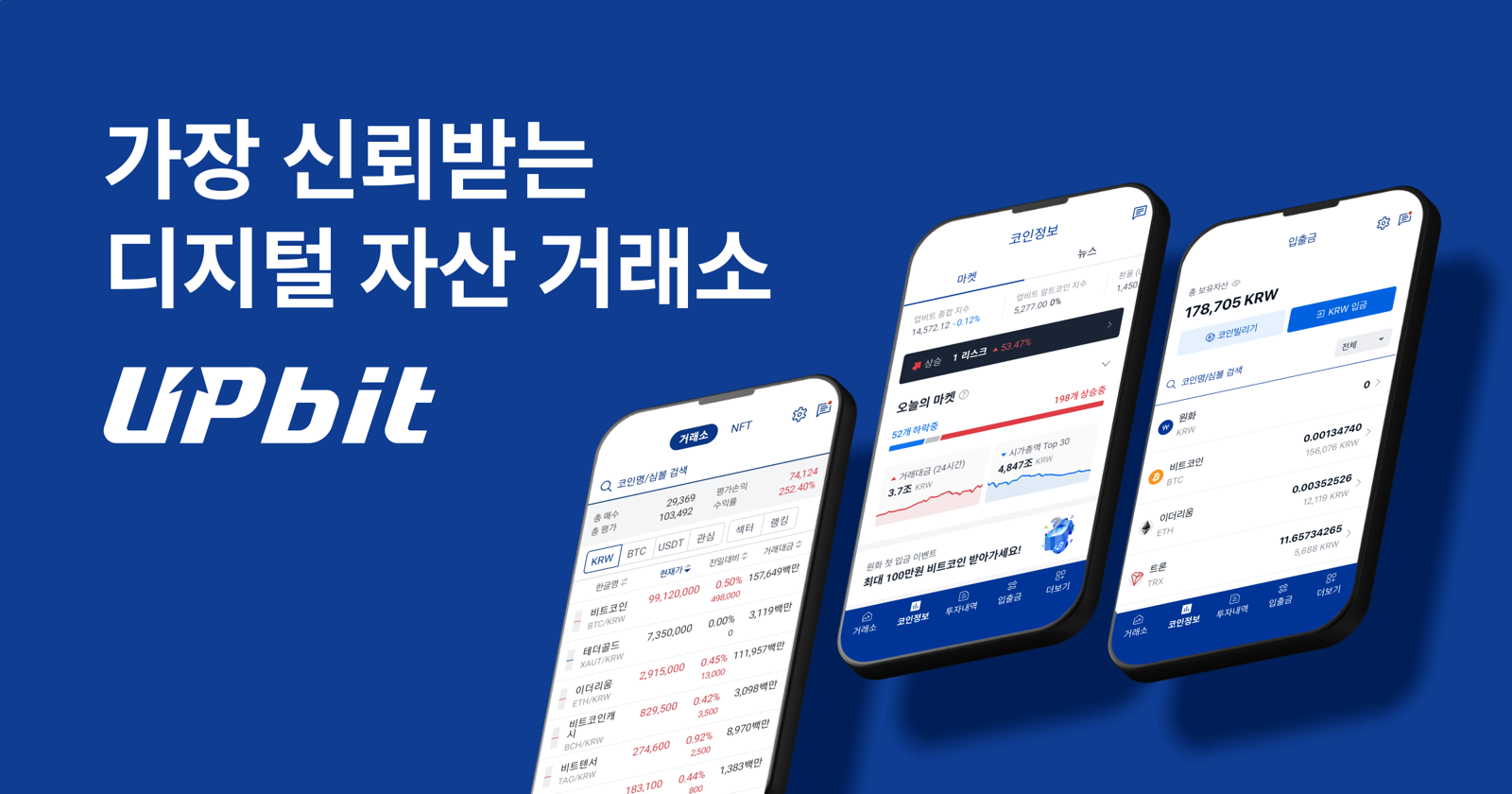
Upbit is a South Korean digital asset exchange built around active KRW markets, mobile-first trading, and access to major crypto assets such as Bitcoin, Ethereum, XRP and selected NFTs. It serves users who want a domestic exchange experience tied to Korean won deposits and withdrawals, with order-book trading, asset custody inside the account, market charts, notices, and withdrawal controls gathered in one place.
KRW markets are the main draw
The defining feature is the depth of Korean won trading pairs. A user in South Korea looks at BTC/KRW, ETH/KRW, XRP/KRW and other listed markets without mentally translating every quote from USD or USDT. That domestic quote currency changes the feel of the exchange: gains, losses, fees , balances and order sizes land in the currency people use for bank transfers and tax records.
Those KRW pairs also explain why prices on Korean exchanges sometimes diverge from global benchmarks. Local demand, capital controls, bank access and withdrawal rules create the well-known Kimchi premium, where a coin trades above offshore prices. Upbit is one of the venues people watch when measuring that Korean market gap, especially during high-volume periods for Bitcoin, XRP and large altcoins.
How the order book turns won into crypto
Trading works through a central limit order book. Buyers post bids, sellers post asks, and completed trades settle inside exchange balances. A market order prioritizes immediate execution at available prices; a limit order waits at the chosen price until it fills, expires, or gets canceled. This structure suits liquid pairs where many traders are competing around the same price levels.
Upbit presents this activity through price charts, live order books, recent trades and account balances. The important habit is reading the pair correctly: BTC/KRW means Bitcoin is priced in Korean won, while BTC/USDT would mean Bitcoin is priced in Tether. The quote asset decides the balance spent when buying and the balance received when selling.
Bank transfer, verification and the Korean account flow
Getting started centers on account creation, identity checks and a supported banking route. Domestic exchanges in South Korea rely on real-name account rules, so fiat deposits connect to a verified person rather than a loose screen name. The onboarding experience therefore feels closer to a regulated financial app than an anonymous web wallet.
Once the fiat rail is active, a user funds the account in KRW, chooses a market, places an order and receives the purchased asset in the exchange wallet. Withdrawals add another layer: addresses, destination exchange details and travel-rule information matter when crypto leaves the platform. Upbit users who transfer assets to another venue should match the network and destination information before sending a coin such as XRP, ETH or a token on an Ethereum-compatible network.
What traders use the mobile app for during fast markets
The mobile app matters because Korean crypto activity is heavily phone-driven. Price alerts, watchlists, candlestick charts and quick order tickets make the app the everyday interface for checking BTC moves during a commute or reviewing altcoin volume after a listing notice. A fast app does not replace judgment, but it shortens the distance between a market move and the user's next order.
For many accounts, the most-used screens are simple: portfolio value, KRW balance, open orders, deposit history and withdrawal status. Upbit also gives NFT access, so users interested in digital collectibles see that activity beside spot-market crypto rather than in a fully separate product world.
Bitcoin, Ethereum, XRP and the altcoin listing rhythm
Large assets anchor the exchange because they attract the broadest liquidity. Bitcoin is the main benchmark, Ethereum connects the account to smart-contract activity, and XRP has long held strong recognition in Korean retail markets. Around those anchors, exchange listings introduce new pairs that bring intense volume, rapid price discovery and stricter attention to notices.
Listing and delisting procedures matter because a centralized exchange chooses which assets appear in its markets. A coin can gain visibility when it appears, lose access when support ends, or move through maintenance when a network upgrade occurs. The safest reading of any listing event is operational: check the supported market, deposit opening time, withdrawal opening time, network, memo requirement and any temporary restrictions before acting.
Fees, spreads and the real cost of a trade
The posted trading fee is only one part of the cost. A liquid KRW pair with a tight spread lets orders enter and exit near the displayed price, while a thin market makes the next available price worse for larger orders. Limit orders give control over the execution price; market orders prioritize completion and accept the visible order-book depth.
Withdrawal fees work differently from trading fees because they relate to moving assets out of the exchange wallet. Bitcoin, Ethereum, XRP and token networks each have their own transfer mechanics, address formats and congestion patterns. On Upbit, a user should treat the withdrawal screen as the final checkpoint for network selection, address accuracy and any memo or tag field required by the receiving wallet.
Security features that shape everyday account behavior
Centralized custody means account security becomes a daily discipline. Login protection, device management, withdrawal address checks and phishing awareness carry real weight because the exchange account controls both KRW and crypto balances. Strong authentication is most useful when paired with a separate email password and a habit of entering the site or app directly.
Compliance is part of the same operating model. The exchange sector in South Korea faces strict attention from financial regulators, anti-money-laundering systems and travel-rule monitoring. That oversight affects onboarding, withdrawal review, foreign-user access and exchange-to-exchange transfers. The trade-off is practical: smoother domestic fiat access comes with stricter identity and transaction controls.
When Binance, Coinbase or Bithumb fit the comparison
A Korean resident comparing venues usually starts with fiat access. Bithumb is another major domestic exchange with KRW markets and a long local history. Binance offers broad global liquidity and many derivatives products, but its fiat route and regulatory posture differ by country. Coinbase focuses on a regulated consumer experience in markets such as the United States and does not function as a Korean KRW exchange.
Notably, Upbit is strongest when the priority is Korean won spot trading, familiar domestic app flows and local market depth. A global exchange becomes more relevant when a user needs assets unavailable in Korea, non-KRW stablecoin routing, or advanced products outside the domestic spot market. The better venue is the one that matches the user's banking access, jurisdiction and asset list rather than the one with the loudest volume claim.
A focused first-trade routine for new users
A good first session is narrow. Open a verified account, deposit a modest KRW amount, choose a major pair, inspect the order book, place a limit order, and review the fill in trade history. That routine teaches the screen layout without mixing in leverage, obscure altcoins or rushed withdrawals.
- Confirm that the market pair uses the intended quote asset, such as KRW.
- Review open orders before assuming a buy or sell completed.
- Use the smallest practical withdrawal first when testing a new address.
- Read exchange notices before trading around maintenance or listings.
- Keep authentication and recovery methods current before holding a larger balance.
After the first trade, the account becomes easier to understand. Balances, average entry, order history and withdrawal status are no longer abstract menu items; they are the record of actions already taken. Upbit works best for users who treat the app as a trading venue with domestic fiat rails, not as a place to chase every new token announcement without checking the market structure.
Before you start with Upbit
What fees does Upbit charge for KRW crypto trading?
Trading costs come from the exchange fee schedule and the spread inside each market's order book. KRW pairs with deep liquidity, such as Bitcoin or Ethereum markets, typically show tighter spreads than small altcoin markets. Withdrawal fees are separate and vary by asset and network, so a trade fee and a transfer fee should be treated as two different costs.
Can foreign users open and use an Upbit account?
Access depends on residency, identity verification, local rules and the exchange's account policies at the time of registration. South Korean real-name banking requirements make domestic fiat access much easier for eligible local users than for people outside Korea. Foreign users should expect stricter checks around verification, deposits and withdrawals, especially when moving assets between exchanges.
Why are Bitcoin prices on Korean exchanges different from global prices?
Korean crypto markets quote many assets directly in KRW and operate inside local banking and regulatory conditions. When domestic demand is strong and arbitrage routes are limited, the Korean price rises above global USD or USDT markets. This gap is commonly called the Kimchi premium, and it appears most clearly on highly watched assets such as Bitcoin.
Does Upbit support NFTs as well as spot crypto markets?
Yes, the official service presents NFT access alongside digital asset trading. The core exchange experience remains spot-market trading in assets such as Bitcoin, Ethereum and XRP, while the NFT area serves users interested in collectible or tokenized digital items. NFT availability, supported collections and transaction details belong to the exchange's current product screens.
Which bank features matter when depositing Korean won?
The important banking feature is real-name fiat access, where the exchange account and bank account match the verified person. That setup supports KRW deposits and withdrawals under Korean exchange rules. Users should also pay attention to transfer limits, deposit timing and any account restrictions shown before moving a large amount of won.
Recovering access if an Upbit login method is lost, what should users expect?
Account recovery focuses on proving identity and regaining control of the registered login and security methods. Because the account can hold both KRW and crypto balances, recovery steps are stricter than a simple password reset. Expect checks around email, phone, identity documents, authentication settings and withdrawal restrictions while the account is being restored.